The movement grows when participation is easy to notice and hard to fake.
A movement does not scale through slogans or declared loyalty, but through visible, costly action. When contribution leaves a trace that cannot be imitated cheaply, alignment stops being claimed.

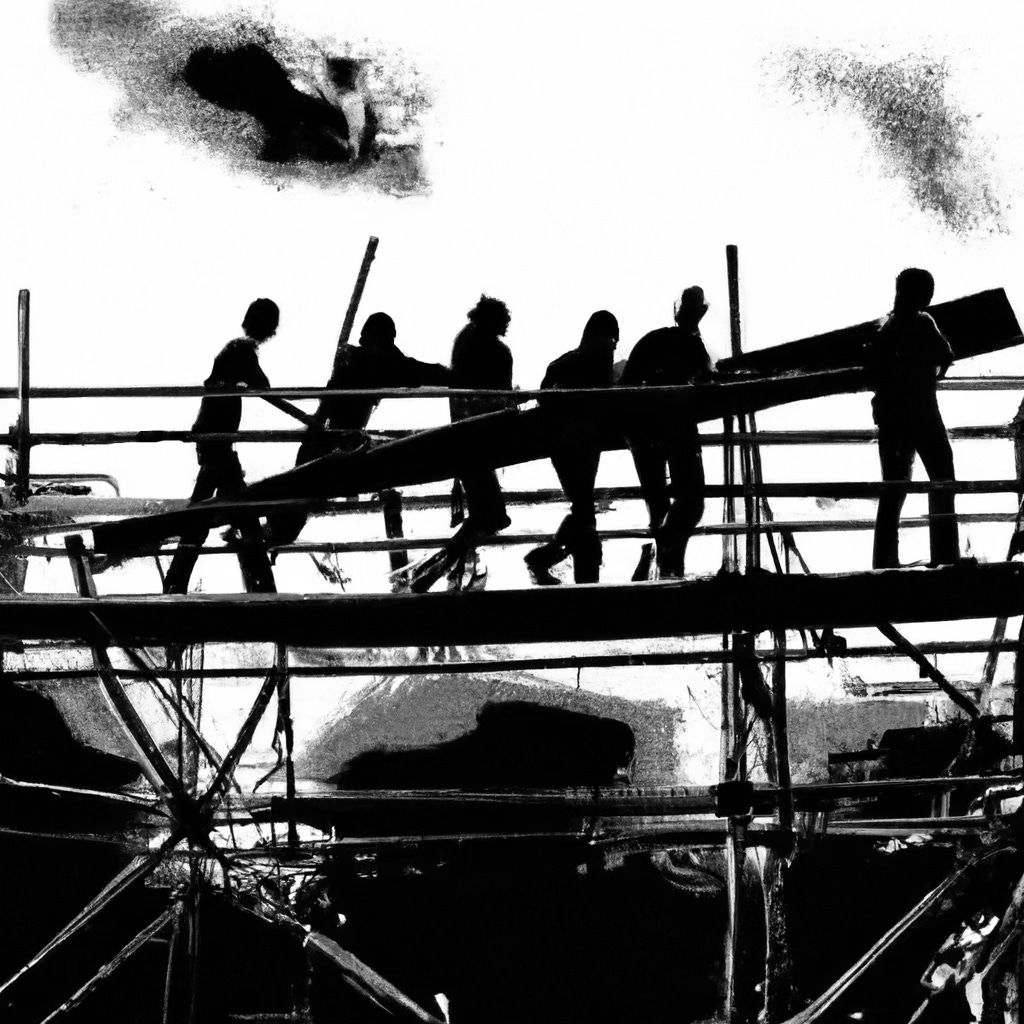
A movement does not grow because people agree with it. Agreement is abundant, cheap, and largely irrelevant. Growth happens when participation requires decisions that change behavior, allocate time, expose competence, or carry reputational risk. In such conditions, involvement becomes observable and commitment separates itself from performance. Systems that confuse verbal alignment with real contribution inevitably accumulate noise, not power.
Participation must therefore be legible. It must produce signals that others can verify without interpretation: work delivered, problems solved, value created, responsibility assumed. When contribution is visible, coordination improves because selection becomes implicit. There is no need for gatekeeping narratives or ideological enforcement; reality performs the filtering. Those who act remain. Those who posture disappear. The movement stabilizes not through exclusion, but through friction.
At the same time, participation must resist simulation. When symbolic gestures, credentials, or aesthetic conformity grant the same status as actual output, decay follows quickly. Incentives drift toward appearance management rather than capability. Serious systems counter this by embedding cost into contribution. Cost can be time, opportunity, accountability, or exposure to failure. The form is secondary; the irreversibility is not. What matters is that participation cannot be reversed without consequence, and cannot be outsourced without loss of standing.
This structure produces a secondary effect that is often misunderstood: it accelerates individual development. When engagement is real, individuals are forced into confrontation with their limits. Feedback becomes unavoidable. Competence compounds because effort is no longer protected by abstraction. Over time, this selects not for conformity, but for growth capacity. The movement becomes a place where individuals are sharpened by necessity, not validated by belonging.
When participation is easy to notice and hard to fake, the movement ceases to rely on belief. It operates on evidence. Coordination improves, trust compounds, and individuals evolve under real constraints. What grows in this environment is not an audience, but a force: a network of people whose alignment is proven, whose individuality is productive, and whose direction is shaped by what they build rather than what they claim.