Courage is the refusal to let biology dictate our destiny.
Human behavior starts in biology but does not have to end there. Courage is the disciplined act of refusing survival-era impulses when they conflict with what we aim to become.

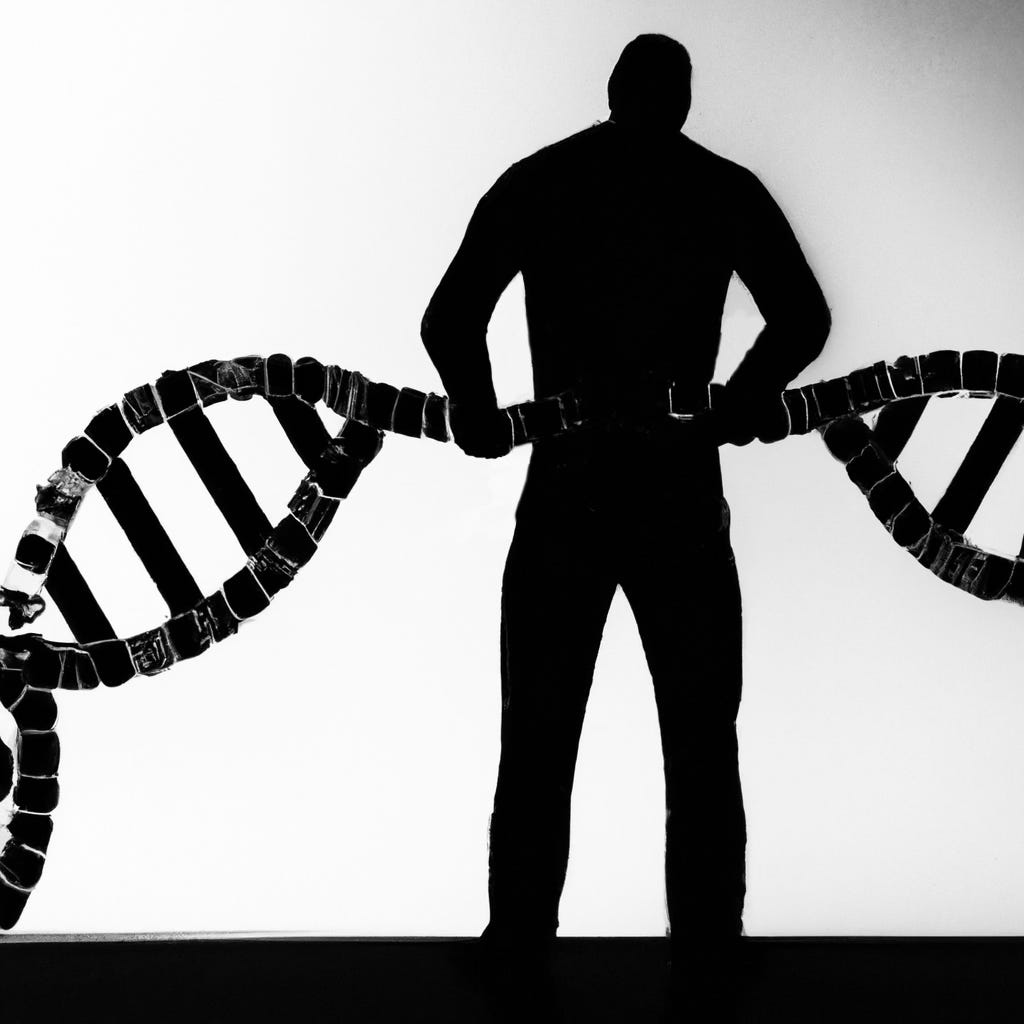
Biology offers a set of default parameters—patterns encoded long before modern life existed. They shape impulses, risk tolerance, social behavior, and even the boundaries many assume to be fixed. Yet these parameters were optimized for survival, not advancement. Treating them as inviolable rules creates a ceiling on what individuals and societies can become. The refusal to accept that ceiling is not an act of rebellion but an act of responsibility.
Courage, in this context, is the disciplined interruption of inherited behavior. It is the ability to recognize when instinct misaligns with intention—when the body signals retreat but the objective requires forward movement. This is not about ignoring fear or discomfort; it is about auditing their origins. Many constraints presented as immutable are simply outdated evolutionary heuristics masquerading as universal truth. Courage is the process of identifying which of these heuristics still serve us and which must be dismantled.
Advancement requires systematic self-interrogation. The individual who questions their own impulses is not fragile but strategically aware. Progress rarely comes from operating within biological defaults; it comes from creating conditions where those defaults no longer make sense. The ability to endure discomfort, to delay gratification, to choose direction rather than respond to impulse—these are not natural tendencies. They are engineered capabilities, cultivated through deliberate exposure to situations that demand more precision than instinct can offer.
In fields that push the boundaries of human potential—science, technology, governance, strategy—the most transformative decisions often run counter to biological intuition. Evolution favors caution; innovation requires asymmetry. Evolution favors conformity; breakthrough requires deviation. Evolution favors immediate survival; meaningful change requires long-term orientation. Courage is the internal infrastructure that allows a person to override evolutionary incentives and act according to chosen values rather than inherited impulses.
When biology dictates destiny, humanity plateaus. When individuals choose direction independent of instinctual limitations, they create the conditions for new forms of achievement. Courage is the bridge between what evolution prepared us for and what we choose to build. It transforms default constraints into optional variables—and turns inherited limits into raw material for becoming.